
Jammu and Kashmir Chief Minister Omar Abdullah has expressed support for the Centre's decision to levy charges on UPI transactions, citing the cost of maintaining the digital payment infrastructure. However, he emphasised the need to protect retail consumers from these fees. Abdullah also discussed the upcoming seven-day Assembly session, highlighting the government's commitment to smooth functioning and addressing MLAs' concerns, and touched upon efforts to tackle drainage issues affecting water bodies.

The Indian government has amended its e-commerce rules to enhance price transparency, prevent manipulation of search results, mandate clear disclosure of sponsored listings, and combat 'dark patterns' to protect consumers.

A district consumer commission in Thiruvananthapuram has directed a cooperative bank to pay over Rs 14 lakh to a widow, Sheeba R, after it unlawfully denied her access to her deposited funds. The bank had cited an ongoing enquiry against its officials as a reason, but the commission ruled this was not a justifiable cause for withholding the money, especially given the woman's circumstances and need for funds for her mother's treatment.

A report by IIT Bombay suggests that the proposed Merchant Discount Rate (MDR) framework for Unified Payments Interface (UPI) transactions needs rationalisation before implementation to safeguard public trust in the digital payments system, highlighting that UPI's long-term economic benefits outweigh potential incremental income from merchant fees.

The Indian government has made Bureau of Indian Standards (BIS) certification compulsory for smartphone screen protectors, effective April 1, 2027. This move aims to ensure product quality, curb low-quality imports, and significantly boost domestic manufacturing, creating a substantial industry and job opportunities.

India's Consumer Affairs Secretary Nidhi Khare announced that cab aggregators have been ordered to cease advance tipping options, deeming the practice misleading and unfair. This follows the Central Consumer Protection Authority (CCPA) imposing a Rs 10 lakh penalty on Rapido for unfair business practices, including advance tipping and "dark patterns" that pressure users to pay more. Investigations into Uber and Ola are ongoing, with the government emphasizing that tipping should be voluntary and post-ride.
A Delhi consumer commission has directed Punjab and Sindh Bank to refund Rs 10,000 to a customer whose ATM transaction failed to dispense cash but debited the amount. The bank was also ordered to pay compensation for delayed reversal, mental agony, and litigation expenses, highlighting a deficiency in service.

'Separate needs from wants and minimise discretionary spending.'

Prime Minister Narendra Modi has urged the fintech sector to expand the global reach of India's Unified Payments Interface (UPI), connecting it with local systems in other countries to help the diaspora save on remittance costs.

Personality rights violations are increasingly being used as vehicles for financial fraud, with unsuspecting consumers misled by fabricated endorsements.

The Supreme Court is set to hear a petition seeking mandatory and uniform labelling of ethanol percentage at petrol pumps and a public database on vehicle compatibility with ethanol-blended fuel. The plea also calls for an expert committee to assess the impact of E20 fuel on vehicles, environment, and food security, and a consumer disclosure protocol.
A Delhi consumer commission has directed Punjab and Sind Bank to refund Rs 10,000 to a customer whose ATM transaction failed to dispense cash but debited his account. The bank was also ordered to pay significant compensation for delayed reversal, mental agony, and litigation expenses, reinforcing consumer rights in banking disputes.

The Telecom Regulatory Authority of India (Trai) has mandated that service providers offer voice-and-SMS-only tariff plans, without bundled data, with a minimum validity of 30 days or less, aiming to provide more affordable and shorter-duration options for consumers who do not require data.
The Payments Council of India has confirmed that Unified Payments Interface (UPI) services will continue to be free for consumers and small merchants, despite a recent Lok Sabha Bill. This clarification addresses concerns about potential charges, emphasising that while a sustainable financial model for UPI infrastructure is being developed, transaction charges will not be passed on to users or small businesses.

Telecom industry body COAI and the British High Commission signed an MoU to boost cooperation in AI, connectivity, and digital trust, fostering responsible tech innovation. The pact, signed at the CO.AI 2026 event, focused on AI's role in intelligent networks, security, and public services. Discussions highlighted AI's importance in combating fraud, improving network efficiency, and ensuring secure digital services. TRAI Chairman Anil Kumar Lahoti and Acting British High Commissioner Ben Mellor emphasised the need for balanced governance and international collaboration to ensure secure, inclusive, and responsible digital transformation.

'Dark patterns exploit human psychology, cognitive biases, urgency, confusion, or lack of attention to increase revenue for digital platforms at the expense of consumer choice and transparency.'

A new US study reveals that individuals with high neuroticism are more susceptible to prolonged mental distress during crises like the COVID-19 pandemic. The research, based on over 100,000 survey responses, found that neuroticism significantly increased anxiety and depression symptoms, persisting even into the post-pandemic period. The findings suggest personality traits can help identify vulnerable groups for targeted mental health support.

TRAI Chairman Anil Kumar Lahoti has called for robust safeguards, human oversight, and intervention capabilities as Artificial Intelligence becomes increasingly integrated into telecom networks. While acknowledging AI's potential to transform network management and threat detection, Lahoti stressed the need for responsible AI deployment, risk assessments, and clear accountability to ensure consumer trust and prevent misuse, especially in combating online fraud.

Punjab & Sind Bank MD and CEO Swarup Kumar Saha clarified that merchants cannot pass on Merchant Discount Rate (MDR) charges to customers for UPI payments, ensuring consumers only pay the displayed price. The new MDR structure, effective October 15, applies a 0.4% charge on P2M transactions above Rs 2,000, with specific flat rates for certain sectors, but small-value transactions remain free.
Ministry of Information and Broadcasting Secretary Chanchal Kumar outlined the critical factors for the media and entertainment sector's next growth phase, including robust intellectual property, sustainable revenue models, and disciplined investments. Speaking at the CII Big Picture Summit, he emphasised the government's role in fostering an environment for creative enterprises and addressing challenges posed by digital platforms and AI. The CII White Paper also projected a USD 100 billion Indian M&E sector, advocating for stronger IP and regulatory reforms.

The Maharashtra Food and Drug Administration has issued a show-cause notice to actors Shah Rukh Khan, Ajay Devgn and Tiger Shroff over their advertisement for Vimal Elaichi, claiming it prima facie amounts to "indirect or surrogate" promotion of prohibited pan masala and tobacco-related products.

Prime Minister Narendra Modi has called upon the fintech industry to expand the global footprint of the Unified Payments Interface (UPI), advocating for its integration with international payment systems to reduce remittance costs for the Indian diaspora. Speaking at the Global Fintech Fest, Modi highlighted UPI's current presence in 11 countries and its connection with Singapore's local system, urging further expansion into nations with significant Indian populations or trade ties. He also stressed the need for India to set its own global payment standards and for the fintech sector to innovate beyond payments, focusing on cybersecurity, ethical data protection, and regulatory frameworks.

Two Indian nationals have been charged in a US federal court for their alleged involvement in a transnational scheme to distribute counterfeit Ozempic, a popular diabetes drug. The scheme involved obtaining fake drugs from China, deceptive packaging, and continued even after FDA warnings, with the accused facing significant jail time if convicted.

Opposition parties in Punjab have strongly criticised the Aam Aadmi Party (AAP) government following the murder of anti-drug activist Parminder Singh Jhota in Mansa. They allege a breakdown of law and order and "jungle raj," demanding accountability from Chief Minister Bhagwant Mann and a CBI probe into the killing. The incident has raised serious concerns about the safety of those fighting the drug menace in the state.

Industry body Assocham has welcomed the new UPI framework for large-value merchant transactions, effective October 15. This framework introduces a 0.4 per cent Merchant Discount Rate (MDR) on person-to-merchant UPI payments exceeding Rs 2,000, with a cap of Rs 300 for transactions over Rs 75,000. The move aims to enhance UPI sustainability, support innovation, and mitigate fraud, while protecting small merchants and ensuring most everyday transactions remain free.

The Finance Ministry has dismissed allegations of US pressure influencing the 0.4% Merchant Discount Rate (MDR) on select UPI transactions. It clarified that NPCI guidelines prioritise RuPay credit cards on UPI and do not favour international cards. The ministry also asserted that the MDR, applicable to person-to-merchant transactions above Rs 2,000, is unlikely to increase cash transactions or cause inflation, with measures in place to prevent burdening consumers.

CCPA said the primary issues raised in the notices included 'deficiency in service'. This includes lack of proper response from customer support, driver refusing to take payment by online mode and insisting for cash only.

Fast-moving consumer goods (FMCG) companies in India are committed to maintaining current prices through the festive season, despite facing increased commodity costs and geopolitical disruptions. This strategy aims to protect consumer demand and sustain volume growth, even as margins remain under pressure.
A consumer redressal commission in Pathanamthitta, Keralam, has ordered King's Biriyani Cafe to pay Rs 96,500 to a woman who suffered a Salmonella infection after consuming food from the eatery. The woman experienced severe illness and hospitalisation, leading to the commission's ruling against the cafe's proprietor and manager.

A government adviser has called for India to reintroduce a petrol variant with a lower ethanol blend, such as E10, alongside the current E20 fuel. This move aims to protect millions of older vehicles, particularly two-wheelers, which may experience performance issues and damage from the higher 20 per cent ethanol blend.

The US push for clearer crypto rules is putting pressure on India to fill its own regulatory gap for virtual digital assets.

Fintech firm BharatPe has publicly supported the government's new Merchant Discount Rate (MDR) framework for UPI merchant transactions, which introduces a 0.4% fee on transfers over Rs 2,000. The company has also distanced itself from its former co-founder Ashneer Grover's strong criticism of these changes, stating his remarks are personal and do not reflect BharatPe's official position. BharatPe believes the new framework will strengthen digital payment economics while protecting consumers and small merchants.
Fintech company BharatPe has expressed strong support for the government's new Merchant Discount Rate (MDR) framework for UPI merchant transactions, which introduces a 0.4% fee on transfers exceeding Rs 2,000. The company explicitly distanced itself from critical remarks made by its former co-founder Ashneer Grover, clarifying that his views do not represent BharatPe's stance. BharatPe CEO Nalin Negi highlighted that the framework aims to strengthen digital payment economics, protect consumers and small merchants, and expand adoption in underserved markets, with most transactions remaining unaffected.

BJD chief Naveen Patnaik has voiced concerns over the Centre's decision to introduce Merchant Discount Rate (MDR) charges on UPI transactions above Rs 2,000 from October 15, urging protection for small traders and common people. This move has sparked a political debate, with the BJP defending the charges as beneficial for digital infrastructure and largely not impacting consumers, while the Congress and traders' associations criticise it as an additional burden.

Elon Musk has renewed his criticism of Mukesh Ambani regarding Starlink's entry into India, accusing Ambani's supporters of hypocrisy for simultaneously claiming Starlink can't compete with low prices and that it poses a strong competitive threat. Musk argues that competition would benefit Indian consumers and that Starlink would adjust pricing if too expensive. He also shared reports alleging Reliance-funded political donations. Communications Minister Jyotiraditya Scindia stated India does not permit monopolies and that multiple players, including Starlink, have received satcom licences.

The Finance Ministry has clarified that the 0.4 per cent Merchant Discount Rate (MDR) on UPI transactions above Rs 2,000, effective October 15, is not expected to increase cash transactions or cause inflation. The ministry also dismissed allegations of US pressure influencing the decision, asserting that the policy aims to promote RuPay credit cards within the UPI ecosystem, and a monitoring mechanism will ensure the MDR burden is not passed on to consumers.
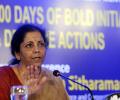
Finance Minister Nirmala Sitharaman has called for enhanced accountability and safeguards for artificial intelligence, particularly as it integrates into critical sectors like finance. Speaking at the Global Fintech Fest, she highlighted the dual nature of AI, capable of accelerating transactions but also amplifying fraud and cyberattacks. Sitharaman stressed the need for human and institutional responsibility in AI-driven decisions, urging regulators and companies to scrutinise high-risk AI applications. She also proposed a federated industry platform for Indian tech companies to navigate international regulations and ensure tax compliance globally.

The Indian Army has launched 'Bharat Rice', a superior-quality rice for defence forces, aimed at improving ration quality and logistics. This initiative, spearheaded by the Directorate General of Supplies and Transport, involves direct supply to Army Supply Depots, including remote areas, and an MoU with FCI for infrastructure utilisation during contingencies. Defence Minister Rajnath Singh highlighted its significance for soldier welfare, operational readiness, and national security, emphasising logistics as combat power.

From superheroes and aliens to witches, ghosts and shape-shifting mutants, these 10 Bollywood women prove that supernatural powers come in all shades of mischief, menace and magic.

Nothing has expanded its premium audio line-up with the launch of the Headphone (1) Pro, the brand's newest flagship over-ear model.
